
Bhubaneswar / Raipur: In what is being hailed as a historic turning point in a decade-long federal deadlock, Odisha and Chhattisgarh are scheduled to hold a high-stakes bilateral meeting on May 23. This crucial session comes on the heels of a breakthrough mandate from the Mahanadi Water Disputes Tribunal (MWDT), which recently granted both states the green light to pursue a mutual, out-of-court settlement rather than continuing adversarial litigation.
With BJP-led governments currently at the helm in both states, political and administrative corridors are moving at a frantic pace to establish a permanent water-sharing blueprint for the Mahanadi river basin—the lifelines of both regional economies.
⚖️ From Courtroom Battle to Cooperative Federalism
The decision to fast-track bilateral talks follows a strict warning issued by the Tribunal, headed by former Supreme Court Justice Bela M. Trivedi. Expressing dissatisfaction over years of data delays and repeated extensions, the Tribunal had given both states a final opportunity to present a mutually agreed-upon formula.
Responding to the pressure, Odisha Advocate General Pitambar Acharya recently announced that both states have formally moved towards an amicable settlement.
“Mutual understanding is the sole effective medium to resolve such complex inter-state disputes. While we move forward with a spirit of collaboration, every step is being taken to completely safeguard Odisha’s territorial and ecological interests,” Acharya stated.
📊 The Breakthrough: Consensus on 40 Years of Hydrological Data
The backbone of the upcoming May 23 talks is a comprehensive, data-driven report compiled by a Joint Technical Committee representing both states.
Following 15 rigorous technical rounds, the committee successfully built a consensus on the annual water-flow data spanning nearly four decades (from 1980-81 to 2018-19). This includes exact volume assessments available upstream of the critical Hirakud Reservoir—a primary point of contention for years.
This mutually verified data report has already received the necessary approvals from Odisha Chief Minister Mohan Charan Majhi and Chhattisgarh Chief Minister Vishnu Deo Sai, laying a solid, factual foundation for the ministerial delegations meeting on May 23.
🌾 The Core Conflict: Upper vs. Lower Riparian Stakes
The Mahanadi River stretches across 851 kilometers, originating from the Bastar Plateau in Chhattisgarh, flowing through Odisha for nearly 494 kilometers, and eventually emptying into the Bay of Bengal.
| Feature | Chhattisgarh (Upper Riparian) | Odisha (Lower Riparian) |
| Catchment Share | ~53.9% of the basin area | ~45.7% of the basin area |
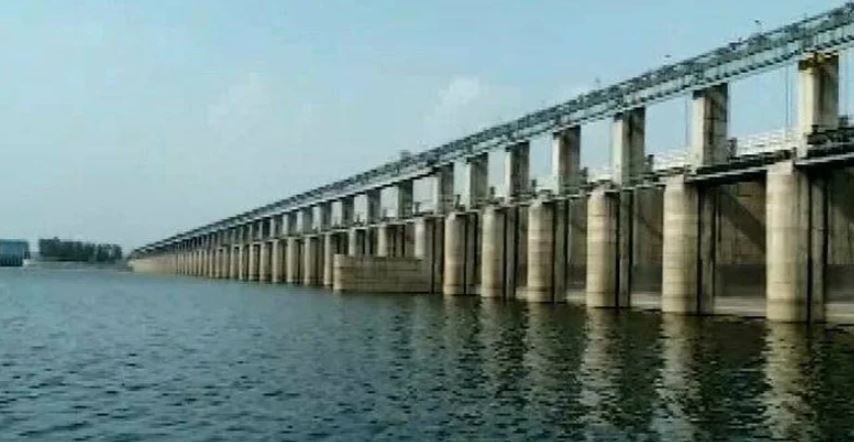
| Primary Infrastructure | 500+ anicuts, 30+ industrial barrages | Hirakud Dam (one of India’s longest earthen dams) |
| Core Concern | Upstream regional development, industrial & agricultural water security | Drastic drop in non-monsoon downstream flow, affecting farming & drinking water |
Odisha’s primary grievance has long been that Chhattisgarh’s extensive upstream constructions block vital non-monsoon water flow, triggering severe agricultural distress and drinking water crises in downstream districts like Sambalpur, Balangir, Cuttack, and Puri. Chhattisgarh, conversely, maintains its right to utilize its rightful share of the river basin’s catchment area for state development.
🛑 Internal Friction: Activists Demand Greater Scrutiny
Despite the optimism displayed by the state machinery, the upcoming talks face domestic pressure within Odisha. Civil society groups, led by the Mahanadi Bachao Andolan, have raised flags regarding the joint technical data submitted to the Tribunal.
Andolan convener Sudarshan Das has publicly urged Chief Minister Mohan Charan Majhi to hold an emergency review meeting with local experts before the May 23 delegation level talks, warning that official numbers might not fully encapsulate the ground realities of a drying downstream delta during peak summer months.
🔮 What to Expect on May 23?
The May 23 meet will focus heavily on drafting the framework for a permanent Mahanadi River Basin Authority—a joint regulatory body that would oversee real-time water releases during the lean, non-monsoon months.
If successful, this bilateral resolution will serve as a landmark model for cooperative federalism in India, proving that complex natural resource disputes can be settled through proactive dialogue rather than perpetual litigation.